



The full-size SUV market is competitive, with several car makers offering SUVs with power, performance, and unique features. Two of the most popular large SUV contenders are the GMC Yukon and the Ford Expedition, but how do you know which one to choose? We want to help you with that choice, so we’ve outlined both options’ features and benefits. Read on for information about powertrains, cargo space, passenger seating, and technology features. We’ll put the 2022 GMC Yukon up against the Ford Expedition and see why the Yukon comes out on top.
The Engine Lineup
When you have a sizeable SUV, it needs more power to get it down the road, and the Yukon doesn’t disappoint. The base engine is a 5.3L V-8 that puts out 355 horsepower and generates 383 lb-ft of torque. A 6.2L V-8 is available for the AT4 trim and comes standard with the top-level Denali. This engine churns out 420 horsepower and gets 460 lb-ft of torque.
There’s also a 3.0L turbo six-cylinder diesel engine available for the Yukon. This powertrain delivers 277 horsepower and gets 460 lb-ft of torque. Each of these engines works with a 10-speed automatic transmission. Rear-wheel drive (RWD) comes standard for most trims, with four-wheel drive (4WD) available as an option.
All Expedition models have the same powertrain. The 3.5L turbo V-6 gas engine generates 375 horsepower and gets 470 lb-ft of torque for all trims except the Platinum. When under the hood of the Platinum, this same engine puts out 400 horsepower and gets 480 lb-ft of torque.
This same engine gets a power boost when paired with the Timberline trim or the Stealth Performance Package. With these Expeditions, it gets 440 horsepower and delivers 510 lb-ft of torque. All models use a 10-speed automatic transmission, and RWD comes standard, although 4WD is available for any trim.
Performance

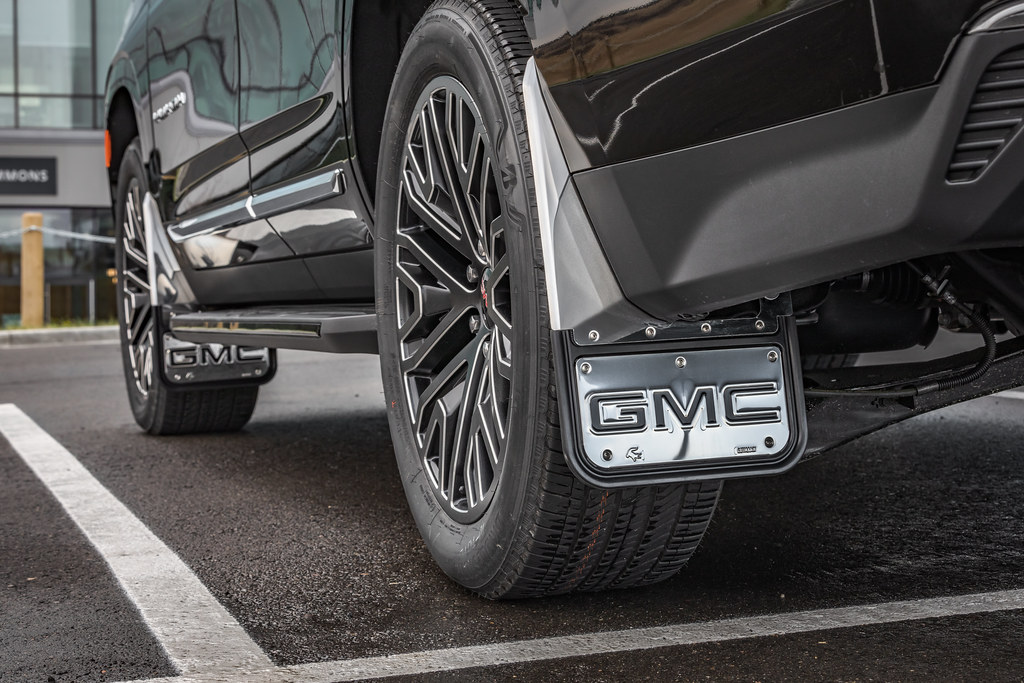
Black Yukon by Truck Hardware is licensed with CC BY 2.0The GMC Yukon provides a smooth and comfortable ride over most roads. If you want to take your Yukon off-road, the AT4 model has additional off-road features, such as a skid plate, two-speed transfer case, and standard 4WD. When equipped, the Yukon can tow up to 8,400 pounds.
The Expedition also has a reputation for providing a smooth and comfortable ride. Despite its size, it is easy to handle. The new Timberline trim has several off-road capabilities, such as an upgraded suspension, a two-speed transfer case, and a skid plate. When equipped, the Expedition can tow up to 9,300 pounds.
Interior Space
The Yukon’s interior cabin is highly versatile. It seats eight with the standard setup, but this can be customized. If you choose a front bench seat, the seating increases to nine. When you opt for the second-row captain’s chairs, you’ll have a seating capacity of seven. The standard Yukon has a 25.5 cu-ft cargo space behind all the seats and 72.6 cu-ft behind the second row. The cargo space increases if you bump up to the longer Yukon XL. This model has 41.5 cu-ft of cargo space behind the third row and 93.8 cu-ft of space behind the second.
The base Expedition trim comes as a two-row model with seating for five. Other trims have three rows and can fit up to seven or eight. This SUV doesn’t offer the option of a bench seat in the front, and it has a slightly smaller cargo area. In the regular length model, there are 19.3 cu-ft of space behind the third row and 57.5 cu-ft of cargo space if you fold down the third row. The extended Max model has up to 36 cu-ft of space behind the third row and 79.6 cu-ft behind the second.
Technology Features
Both the Yukon and Expedition offer a wide range of technology features to keep all passengers connected and informed. The Yukon comes standard with a large 10.2-inch touch screen in the center of the dash. In addition, it includes six USB ports, a Wi-Fi hotspot, and wireless Apple CarPlay and Android Auto. A dual-screen rear entertainment system is available, along with a 14-speaker Bose stereo system, navigation, and a 12-inch digital gauge cluster that sits in front of the driver.
The base model of the Expedition has a 12-inch touch screen, Wi-Fi hotspot, and four USB ports. Wireless charging, an upgraded Bang & Olufsen stereo system, and extra USB ports are available for the Expedition, along with a digital gauge cluster for the driver.
Safety Features
Every 2022 Yukon and 2022 Expedition comes standard with various safety systems. For example, the Yukon has a rearview camera, forward collision warning with automatic braking, pedestrian detection, lane departure warning, automatic high-beam headlights, and a rear seat reminder. Other intelligent features that come standard on the Yukon are front and rear parking sensors, rain-sensing windshield wipers, and a Teen Driver system that allows parents to set limits for their new drivers.
For even more driver aids, the Yukon offers a lane-change alert system, reverse automatic braking, a safety alert seat, and blind-spot monitoring with rear cross-traffic alerts. A rear pedestrian detection system is also available, along with a head-up display.
Every 2022 Expedition comes with Ford’s Co-Pilot360 suite of driver aids. This group of safety systems includes many of the same technologies, including automatic high beams, lane-keep assist, forward collision warning, and automatic braking. It also includes blind-spot monitoring with rear cross-traffic alert.
The 2022 GMC Yukon and the Ford Expedition each have many noteworthy features and encapsulate what makes a full-size SUV worth owning. But comparable performance combined with a more versatile interior makes the GMC Yukon the clear winner.
Although the Expedition has a slight edge over the Yukon regarding standard horsepower and torque, it doesn’t make up for its standard five-person capacity and limited cargo space. To find out more about why the Yukon is an excellent choice for a full-size SUV, stop by Reiselman Buick GMC and talk to one of our sales staff. They’ll be happy to send you out on the road for a test drive so you can try out a GMC Yukon for yourself.
Connect with us


Recent Blog Entries
- Answers to Common Questions About the 2026 GMC Sierra EV for Springfield Families Going Electric
- Springfield Drivers Benefit from Advanced Trailering Technology in the 2026 GMC Sierra 1500
- Why Families in Springfield TN Choose the 2026 GMC Canyon Instead of the Ford Ranger®
- Wondering if the 2025 GMC Savana Passenger Van Fits Your Springfield TN Business or Family Needs
- Super Cruise in the 2025 GMC Yukon XL Makes Daily Driving in Springfield TN Smoother Than Ever