



2026 GMC Sierra 1500 in Springfield, TN
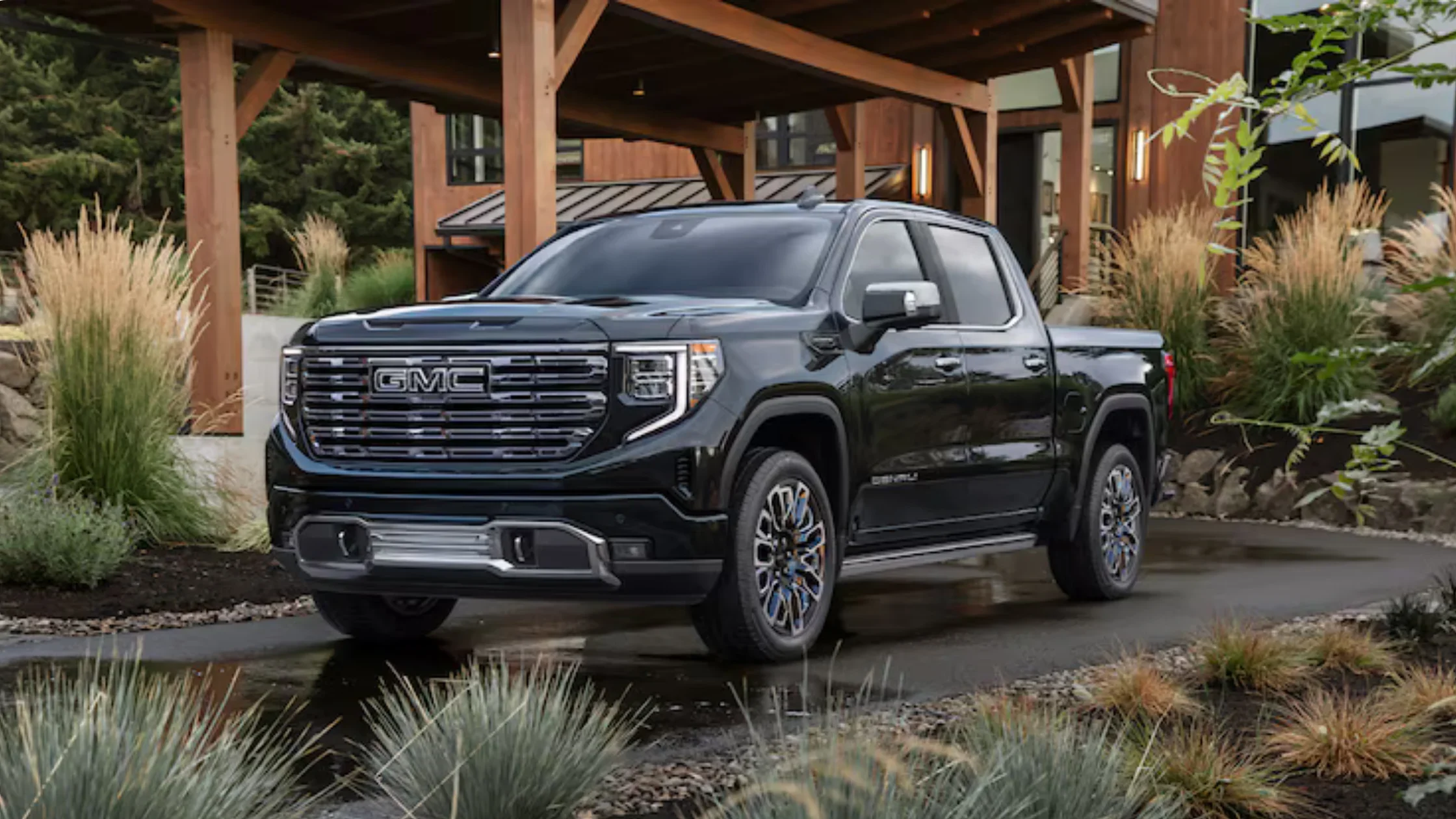
The 2026 GMC Sierra 1500 presents an extensive combination of powertrains, chassis engineering, and advanced integrations. Designed with multiple cab and bed configurations, it continues to serve as a full-size pickup capable of meeting the needs of towing, hauling, and daily versatility. With expanded engine technologies, refined suspension systems, and precise attention to specifications, the 2026 model sets a technical benchmark among light-duty trucks.
Engine Options and Power Specifications
The 2026 GMC Sierra 1500 offers four distinct engines, each engineered with materials and configurations designed for performance and efficiency. The 2.7L Turbo DOHC VVT DI engine produces 310 horsepower at 5600 rpm and 430 lb.-ft. of torque between 1500 and 4000 rpm. Constructed with a cast aluminum block and cylinder heads, it employs dual overhead camshafts, four valves per cylinder, continuously variable valve timing, variable valve lift, and Active Fuel Management.
For diesel strength, the 3.0L DOHC I-6 Turbo Diesel is available. It generates an estimated 305 horsepower at 3750 rpm and 495 lb.-ft. of torque at just 1500 rpm. This engine also uses cast aluminum for both the block and cylinder heads, with dual overhead camshafts and four valves per cylinder. Its high-pressure common-rail direct injection system and electronic throttle valve work to deliver consistent low-end torque and efficient performance.
The 5.3L V-8 VVT DI engine continues GMC’s approach to balancing strength with fuel management. Producing 355 horsepower at 5600 rpm and 383 lb.-ft. of torque at 4100 rpm, it incorporates an overhead valve design with two valves per cylinder, cast aluminum block and heads, and Dynamic Fuel Management. Its direct high-pressure injection system ensures strong throttle response while improving efficiency under light loads.
At the upper end of the lineup, the 6.2L V-8 VVT DI produces 420 horsepower at 5600 rpm and 460 lb.-ft. of torque at 4100 rpm. It employs cast aluminum construction, an overhead valve train, two valves per cylinder, and direct injection with variable valve timing. With Dynamic Fuel Management, it maximizes output while maintaining efficiency in varying driving conditions.
Transmission and Axle Configurations
Transmission systems vary depending on the engine. The 2.7L Turbo pairs with an 8-speed automatic, while the 3.0L Turbo Diesel, 5.3L V-8, and 6.2L V-8 pair with a 10-speed automatic. Gear ratios are engineered for both power delivery and highway efficiency. The 8-speed features ratios ranging from 4.56 in first gear to 0.65 in eighth gear, with a reverse ratio of 3.82. The 10-speed features ratios from 4.70 in first gear to 0.64 in tenth gear, with a reverse ratio of 4.87.
Axle ratios vary by configuration. The 2.7L engine is matched with a 3.42 ratio, the 3.0L with 3.23 or 3.73 in Max Trailering setups, and the 5.3L with 3.23 or 3.42 depending on trim. The 6.2L V-8 is equipped with a 3.42 ratio for strength under load.
Fuel Efficiency and Tank Capacities
The 2026 GMC Sierra 1500 provides multiple fuel efficiency ratings across engines and drivetrain configurations. The 2.7L Turbo achieves 19 mpg city and up to 22 mpg highway with 2WD, while the 3.0L Turbo Diesel reaches 24 mpg city and up to 29 mpg highway with 2WD. The 5.3L V-8 records 17 mpg city and up to 21 mpg highway, and the 6.2L V-8 reaches 16 mpg city and 20 mpg highway in select 4WD models. Fuel tank capacity ranges from approximately 22 gallons.
Chassis, Suspension, and Steering Systems
The 2026 GMC Sierra 1500 is equipped with advanced suspension systems designed for control and stability. The front suspension uses independent coil-over-shock with twin-tube absorbers. AT4 models feature Rancho shocks, and AT4X models utilize Multimatic DSSV dampers. Adaptive Ride Control is available on Denali trims for optimized on-road refinement. Rear suspension systems employ a solid axle with semi-elliptic, variable-rate, two-stage multileaf springs with twin-tube absorbers, with variations similar to the front depending on trim.
Steering is controlled through an electric power-assisted rack-and-pinion system. Braking is provided by four-wheel disc brakes with electro-hydraulic power assist and ABS. Rotor dimensions measure 13 x 1.18 inches in the front and 13.6 x 0.79 inches in the rear, with vented Duralife™ rotors engineered for longevity.
Exterior Specifications and Configurations
The 2026 GMC Sierra 1500 offers multiple cab and bed combinations, each with precise measurements. Regular Cab wheelbases measure 126.5 inches for the 6’6” box and 139.5 inches for the 8’ box. Double Cab configurations measure 147.4 inches, while Crew Cab configurations measure 147.4 inches with a 5’8” box or up to 157.1 inches with a 6’6” box. Overall length extends from 210.9 inches in the Regular Cab to 242.4 inches in lifted Crew Cab trims.
Overall width remains consistent at approximately 81.1 to 81.2 inches across all cab styles. Heights range from 75.4 inches in the Crew Cab 4WD with a 6’6” box to 78.3 inches in lifted Crew Cab models. Ground clearance varies from 7.7 inches in certain 2WD configurations up to 11.2 inches in AT4 models.
Exterior wheel and tire options include 17-, 18-, 20-, and 22-inch wheels in both steel and aluminum. Tire options range from P255/70R17 all-season to LT275/65R18 Goodyear Wrangler Territory and P275/50R22 all-season variants. New exterior color additions for 2026 include Glacier White Tricoat and Coastal Dune, while White Frost Tricoat and Thunderstorm Gray are removed.
Interior Dimensions and Passenger Comfort
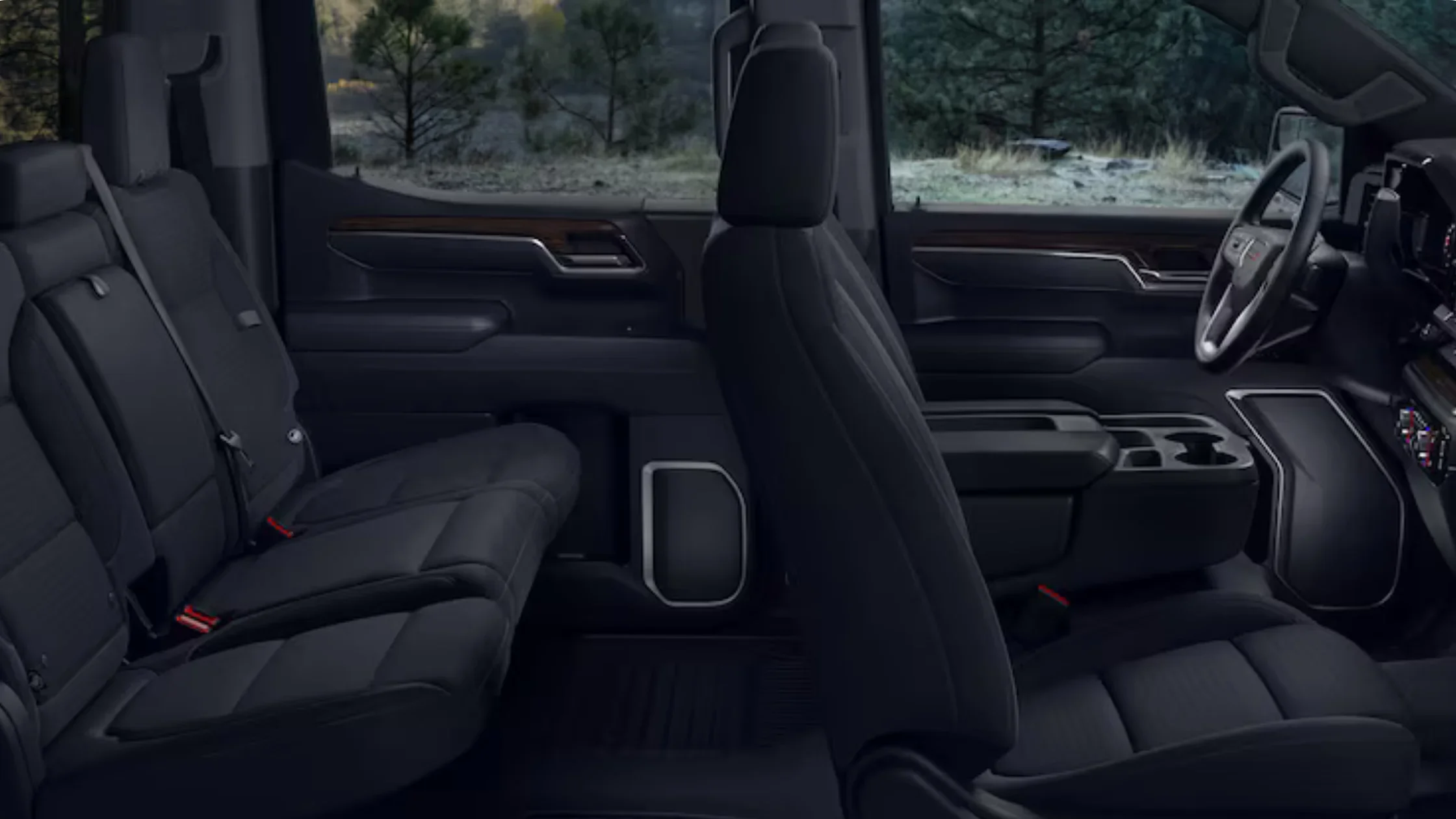
Interior space is designed for function and passenger comfort. Regular Cab models feature 43.1 inches of headroom and 44.5 inches of legroom in the front row. Double Cab models maintain 43 inches of headroom and 44.5 inches of front legroom, with 35.2 inches of rear legroom. Crew Cab models provide 43 inches of front headroom and 43.4 inches of rear legroom, offering maximum space for passengers. Shoulder room reaches up to 66 inches in the front and over 65 inches in the rear, while hip room measures approximately 61 inches in the front and 60 inches in the rear depending on cab style.
Weight, Payload, and Gross Vehicle Ratings
Base curb weights vary by engine and cab style. The 2.7L engine ranges from 4410 pounds in the Regular Cab 2WD to over 5070 pounds in Crew Cab lifted configurations. The 5.3L V-8 ranges from 4590 pounds to 5300 pounds depending on configuration. The 6.2L V-8 begins at 5250 pounds in Crew Cab 5’8” 4WD setups and reaches 5550 pounds in AT4X. The 3.0L Turbo Diesel ranges from 5040 pounds in 2WD Crew Cab to 5450 pounds in 6’6” 4WD lifted models.
Gross vehicle weight ratings also vary. Regular Cab models record maximum GVWR at 6700 to 6900 pounds. Double Cab configurations range from 6800 to 7300 pounds, while Crew Cab models reach up to 7300 pounds in NHT-equipped setups. Payload capacity spans from approximately 1730 pounds in certain 6.2L configurations to over 2260 pounds in 2.7L Regular Cab setups.
Trailering Capacities and Configurations
Trailering strength is a defining capability of the 2026 GMC Sierra 1500. The 2.7L engine supports up to 9500 pounds in the Regular Cab 2WD with an 8’ box, while the 5.3L V-8 reaches 11,300 pounds in NHT-equipped Crew Cab 2WD setups. The 6.2L V-8 achieves 13,200 pounds in NHT Crew Cab configurations. The 3.0L Turbo Diesel offers maximum capability at 13,300 pounds when paired with 2WD and NHT equipment.
Technology and Connectivity Features
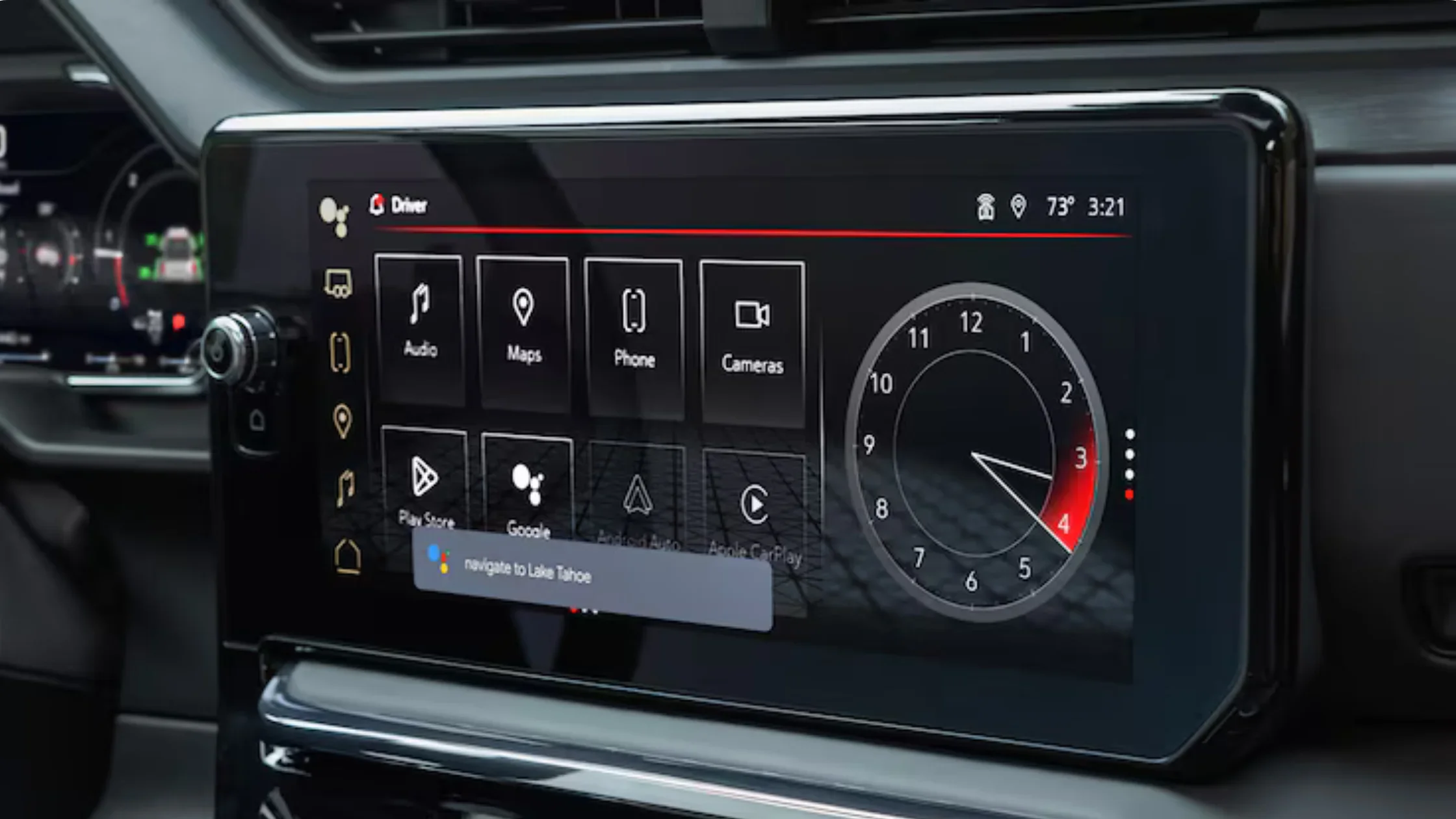
The 2026 GMC Sierra 1500 integrates digital and connectivity functions. Amazon Alexa is available for voice-enabled controls, navigation, music streaming, and compatible smart-home device interactions. Remote vehicle functions, including lock, unlock, and start, are supported with required factory-installed systems and linked accounts. Integration with GM services allows drivers to monitor vehicle health, access diagnostics, and remain connected while on the road.
Safety Engineering and Structural Design
Safety is supported by a combination of braking, suspension stability, and weight distribution. Four-wheel ABS with electro-hydraulic assist provides controlled braking under load. Structural strength is demonstrated through GVWR ratings across all cab types, ensuring load-bearing consistency. Configurable transfer cases and electronic stability systems further support driving control in both 2WD and 4WD environments.